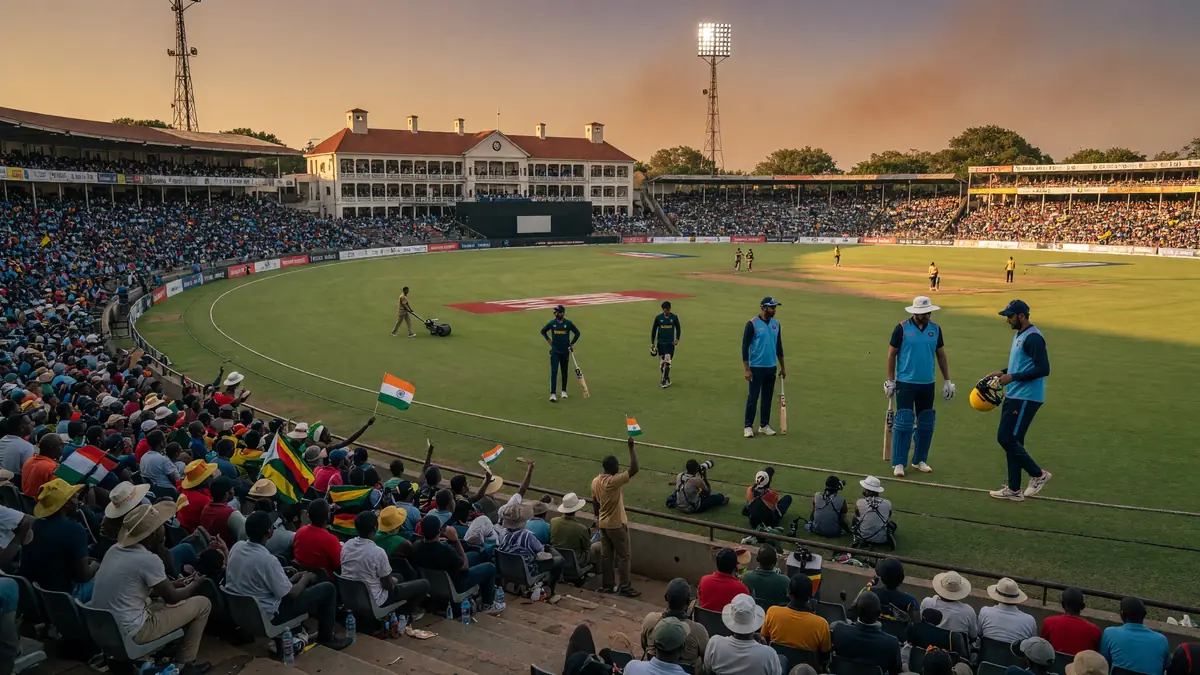
India will open a three-match T20I series against Zimbabwe at Harare Sports Club on July 23, 2026, with Shreyas Iyer confirmed as captain and Tilak Varma named vice-captain of a 15-player touring party. All three fixtures — July 23, 25 and 26 — are scheduled for 4:30 PM IST at the same Harare venue, giving the visitors a compact window rather than a multi-city swing.
The BCCI list mixes familiar T20 names with four first-time India T20I call-ups, returns for Rinku Singh and Mayank Yadav, and a late spin change after Varun Chakravarthy withdrew with a hamstring injury sustained during the T20Is in England. Zimbabwe will be led by Sikandar Raza. Below is a clear reading of both squads, the selection calls that matter, and the timetable before the first ball.
· Paripesa11 News Desk · Cricket News
Series frame: three T20Is, one ground, four days
Unlike longer bilateral tours, this assignment is tightly packed. The 1st T20I is on July 23, the 2nd on July 25 and the 3rd on July 26, each listed at 4:30 PM IST in Harare. Staging every match at Harare Sports Club removes travel variables and puts the focus on day-to-day recovery, bowling workloads and how quickly uncapped players settle into international tempo.
For Indian cricket followers who track form into franchise and national windows, a short away series is often used to hand responsibility to a settled core while stress-testing bench depth. Iyer’s continued captaincy and Varma’s elevation as vice-captain signal continuity at the top of the group even as four new names join the room.
India’s 15: leadership, keeping options and pace depth
The touring squad, as named, is: Shreyas Iyer (captain), Tilak Varma (vice-captain), Ishan Kishan, Prabhsimran Singh, Vaibhav Sooryavanshi, Abhishek Sharma, Shivam Dube, Rinku Singh, Harsh Dubey, Suryansh Shedge, Ravi Bishnoi, Prince Yadav, Mayank Yadav, Ashok Sharma and Yash Thakur.
Role balance is straightforward on paper. Iyer anchors the middle-order batting brief as captain. Varma and Abhishek Sharma cover left-hand batting with all-round utility. Ishan Kishan and Prabhsimran Singh give the side two wicketkeeper-batter options. Vaibhav Sooryavanshi stays in the mix after recent attention as a young batter. Shivam Dube and Suryansh Shedge add middle-overs power and bowling support, while Harsh Dubey arrives as a bowling all-rounder on a maiden T20I call-up.
The pure bowling half leans on wrist-spin from Ravi Bishnoi plus a pace cluster of Prince Yadav, Mayank Yadav, Ashok Sharma and Yash Thakur. That construction suggests India want multiple right-arm seam looks rather than a single designated new-ball pair, useful when conditions in Harare can swing between dry grip and evening moisture.
Four maiden T20I call-ups and what they change
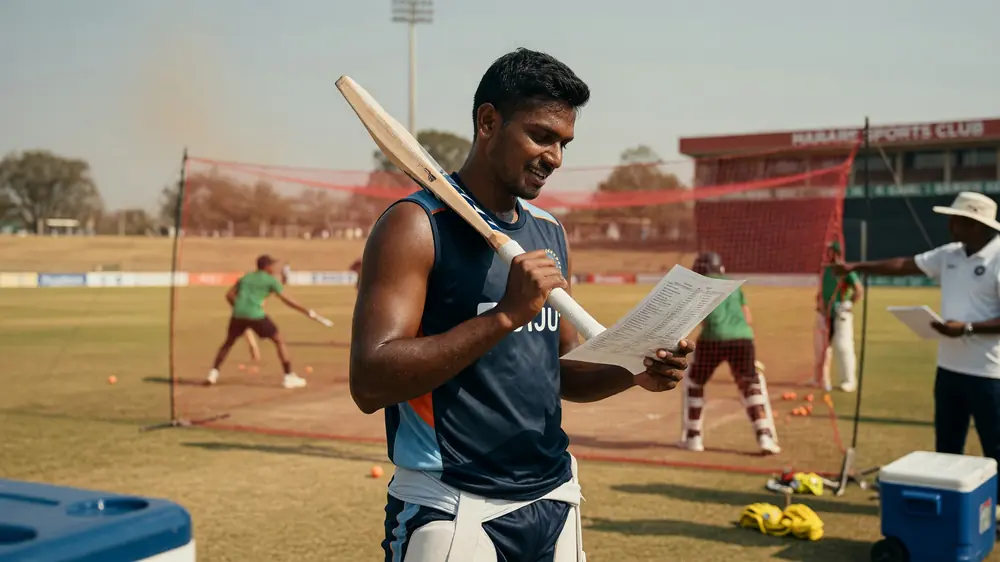
Prabhsimran Singh, Yash Thakur, Ashok Sharma and Harsh Dubey are the four players receiving their first India T20I selections on this tour. That is a large intake for a three-match series and it reshapes how the bench will be used.
Prabhsimran’s inclusion gives India a second aggressive keeper-batter profile beside Kishan, which can matter if the team wants different strike rates at the top or a floating middle-order hit. Yash Thakur and Ashok Sharma expand the pace cupboard, offering selection flexibility if Mayank Yadav’s workloads are managed carefully after his return. Harsh Dubey, already seen in ODIs, adds a left-arm bowling all-round option that can lengthen the batting card without surrendering an overs allocation.
Maiden tours rarely guarantee all four debutants a first XI on day one. More often, one or two earn a debut while the others remain match-day insurance. Still, naming four uncapped players at once tells you the selectors want live international data before denser white-ball windows later in the calendar.
Returns, replacements and the names left out
Rinku Singh’s return restores a finisher who thrives against pace into the death overs. Mayank Yadav’s recall reintroduces genuine high pace after periods on the sidelines. Together they pull the squad back toward a more recognisable India T20 look even while several senior regulars sit this trip out.
The sharpest bowling change is medical rather than tactical. Varun Chakravarthy withdrew after a hamstring injury from the England T20Is; Ravi Bishnoi comes in as the replacement. Wrist-spin remains available to Iyer, but the method differs — Bishnoi’s googly-led threat is not a like-for-like mirror of Chakravarthy’s carrom and pace variations. Captains often adjust field sets and middle-over plans when that swap happens mid-cycle.
Sanju Samson is not in the touring party. Axar Patel, Arshdeep Singh, Harshit Rana and Washington Sundar are also absent. Those omissions look consistent with rotation after a heavy schedule rather than a single disciplinary storyline. Samson’s absence does raise the practical importance of the Kishan–Prabhsimran keeping split for this specific series.
Readers following every India white-ball note can scan the wider cricket news desk for related updates around the same window; the squad sheet above is the factual base for this Harare assignment only.
Zimbabwe under Sikandar Raza
Zimbabwe’s squad is captained by Sikandar Raza and includes Brian Bennett, Ryan Burl, Ben Curran, Blessing Muzarabani, Richard Ngarava, Dion Myers, Clive Madande, Wellington Masakadza, Brad Evans, Milton Shumba, Newman Nyamhuri, Tinotenda Maposa, Tadiwanashe Marumani and Tashinga Musekiwa.
The group pairs long-serving internationals with domestic performers who know Harare’s dimensions. Raza’s all-round brief remains central. Ryan Burl offers left-hand middle-order power and leg-spin overs. Blessing Muzarabani and Richard Ngarava form a familiar new-ball axis, while Wellington Masakadza supplies specialist spin. Clive Madande and Tadiwanashe Marumani cover the gloves and top-order energy. Newman Nyamhuri and Tinotenda Maposa add younger pace depth beside Brad Evans’ all-round overs.
Home sides in short T20 series often lean on local knowledge of lengths that die into the surface and which square boundaries reward aerial shots. India’s uncapped bowlers will be judged quickly on whether they hit those hard lengths without leaking pace-on width.
Match-by-match timetable
Confirmed schedule details for the series:
- 1st T20I — July 23, 2026, Harare Sports Club, 4:30 PM IST
- 2nd T20I — July 25, 2026, Harare Sports Club, 4:30 PM IST
- 3rd T20I — July 26, 2026, Harare Sports Club, 4:30 PM IST
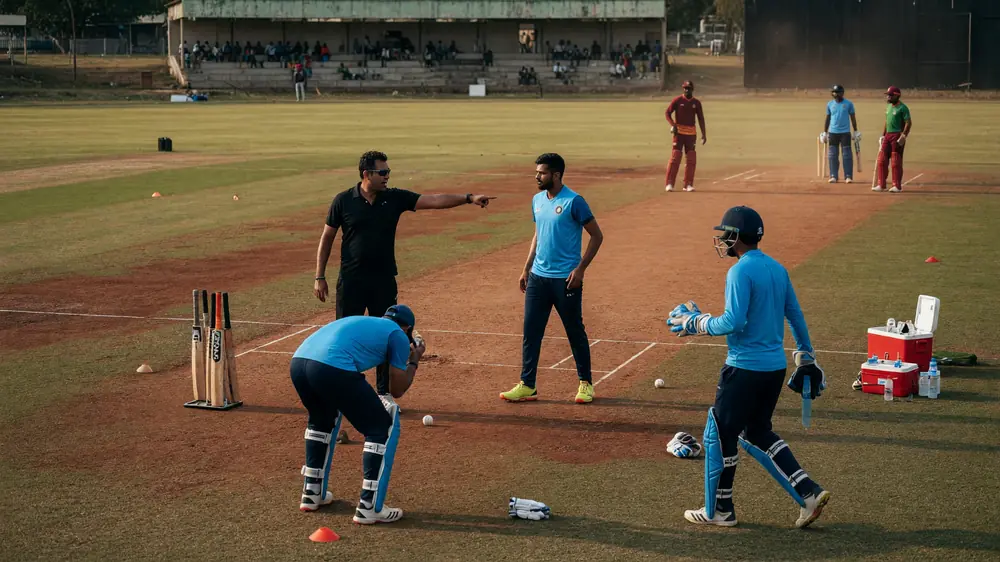
Back-to-back cricket on July 25 and 26 will test fast-bowling rotations. Expect India to avoid asking the same two quicks to take the new ball in every innings unless match-ups demand it. For Zimbabwe, the same compressed finish can favour experienced campaigners who already manage recovery routines on home soil.
How to read the XI decisions before July 23
A 15-player list is not a playing eleven. The open questions before the first T20I are practical rather than dramatic:
Keeping choice. If India want maximum top-order intent, Prabhsimran can push for a debut; if they prioritise experience behind the stumps and left-hand balance, Kishan remains the steadier default. Both can still travel in the same 15 without sharing every XI.
Spin share. With Chakravarthy out, Bishnoi is the headline wrist-spinner, but all-round overs from Abhishek Sharma, Dube, Dubey or Varma can still decide whether India field one or two specialist spinners on a given night.
Pace pecking order. Mayank Yadav’s raw speed makes him a selection magnet when fully available, yet four-day density argues for sharing new-ball and death duties with Thakur, Ashok Sharma and Prince Yadav. Debut caps for the uncapped pacers are more likely if India rest or rotate Mayank across the three games.
Finisher lane. Rinku Singh and Shivam Dube can overlap in role. The difference is bowling insurance from Dube versus Rinku’s pure finishing profile. Net sessions and left-right combinations against Zimbabwe’s seam attack will decide which one locks the No. 5–7 band.
What fantasy and form trackers should lock first
Short bilaterals punish overconfidence in reputation picks that are not in the XI. Until toss sheets appear, the only locked facts are the squad membership, captains, venue and start times. Useful preparation is narrower:
Track confirmed warm-up availability for Mayank Yadav and the uncapped pacers. Note whether Prabhsimran or Kishan keeps in any public practice reports. Watch Zimbabwe’s new-ball pairings — Muzarabani and Ngarava historically set the early-over tone at home. Avoid projecting exact fantasy ownership percentages; those shift after the first XI is out.
Captaincy conversations around Iyer, Raza, Abhishek Sharma or Rinku only become evidence-based after team sheets. Until then, build longlists from this 15 and Raza’s group, then cut hard when the official elevens land each match afternoon.
Selection themes without stretching the evidence
Several themes are supported directly by the named lists. India are comfortable handing Tilak Varma vice-captain responsibility on the road. Selectors are willing to blood multiple uncapped players in one white-ball pocket rather than drip-feeding debuts. Wrist-spin depth is being protected even when a preferred option is injured. Senior multi-format names such as Axar, Arshdeep and Washington Sundar can be rested without the tour being framed as a developmental afterthought, because Iyer, Varma, Abhishek Sharma, Dube, Rinku and Bishnoi still supply recognised T20 quality.
What the announcement does not yet prove is hierarchy inside each role cluster. Saying four debutants were picked is not the same as saying all four will play. Saying Samson is omitted is not the same as a permanent national-team exit — especially when other reports place him in broader multi-event planning outside this specific tour. Keeping those distinctions clear avoids turning a squad release into fiction.
Zimbabwe’s route to applying scoreboard pressure
Hosts chasing an upset in a three-match set usually need early wickets with the new ball and a middle-order engine who can take the twelfth to sixteenth overs. Raza and Burl fit the second requirement; Muzarabani and Ngarava fit the first. Fielding standards on the larger Harare pockets often decide whether India tops-up 10 extra runs through twos and misfields.
For India, the counter is disciplined powerplay bowling and a top order that does not leave the middle stranded against slower cutters. Vaibhav Sooryavanshi’s presence keeps an ultra-attacking left-field option available if the surface invites pace-on hitting up front. Abhishek Sharma’s dual skill set remains one of the more transferable assets across changing match-ups.
What to watch next
The next hard checkpoint is the 1st T20I on July 23 at Harare Sports Club, 4:30 PM IST. Before then, look for the official playing XI, any late fitness notes on the pace unit, and whether Zimbabwe tweak their balance between a second spinner and an extra seamer. The 2nd and 3rd T20Is follow on July 25 and 26 at the same ground, so day-two recovery headlines will matter as much as day-one results.
Match-afternoon team sheets usually land closer to toss than to breakfast briefings. Watch BCCI and Zimbabwe Cricket channels for the confirmed elevens, then track any same-day bowling updates that change how India share the new ball across the three-night Harare finish.