· Paripesa11 News Desk · Fantasy Tips
Where the series stood on the eve of Trent Bridge
Going into the third T20I at Trent Bridge on 7 July 2026, England held a 1-0 lead in the five-match series after beating India by four wickets in the second game. The win came in a chase: India made 190 for 7 in twenty overs, and England got home at 191 for 6 with an over to spare. Ishan Kishan's 49 from 40 balls, Abhishek Sharma's 43 from 24 and Shreyas Iyer's 37 from 22 were the headline scores on the India innings. Sam Curran's 3 for 33 was the decisive spell on a flat surface, and Jacob Bethell's unbeaten 76 from 46 earned him the Player of the Match award. That was the formline a fantasy reader had to weigh before locking an XI for the dead-rubber evening fixture in Nottingham.
The published pre-match preview framed the third game around the previous match's lessons rather than the series arithmetic. With England already ahead, the read on Trent Bridge and on individual player form mattered more than the table. The preview's captain and vice-captain suggestions — Suryavanshi and Abhishek Sharma, with Ishan Kishan and Jacob Bethell as vice-captains — are the four names that anchored the fantasy conversation. They are also the four names a retrospective look at the preview will lean on, because they are the players the preview itself isolated.
The Trent Bridge pitch read
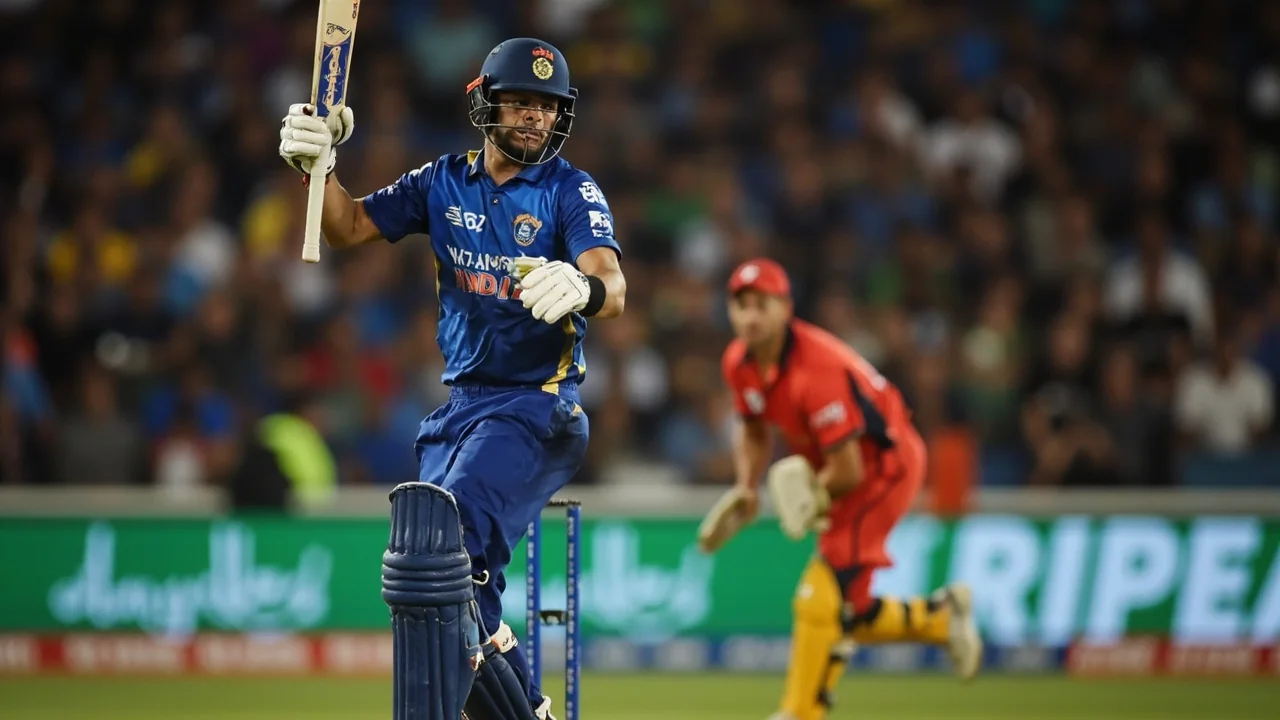
The preview characterised Trent Bridge as a batting-friendly ground that suited the pace bowlers, with a listed average first-innings score of 165. That is the line a fantasy XI should have been built on, not the headline series number. A 165-run first-innings average is high enough to clear boundary-rope totals without exceptional hitting, and low enough that wickets-in-hand at the death still matter. Both teams would have been planning around par rather than pursuit.
For a fantasy reader, the pitch read translated into three small calls. First, top-order batters were more likely to convert starts than middle-order batters, because the powerplay usually dictates the par score on a flat deck. Second, pace bowlers were more attractive than wrist-spinners, because the preview's reading was that the surface rewarded accuracy through the air rather than turn. Third, the captain call should have leaned into a player who could bat the full innings on a flat surface — someone with a top-three spot and a recent record of finishing unbeaten, not a middle-overs accumulator.
That is the structural reason both Suryavanshi and Abhishek Sharma sat at the top of the captain list. Both open or top-three bat, both are stroke-makers rather than accumulators, and both have shown they can take advantage of pace-and-bounce conditions. On a 165-par surface with a pace bias, the multiplier on a top-order batter's innings is meaningfully higher than on a spin-dominant surface, and that is the lever a fantasy captain pick should pull.
Why Suryavanshi and Abhishek Sharma as captain
Vaibhav Suryavanshi and Abhishek Sharma were the preview's two captain picks, with Ishan Kishan and Jacob Bethell named as the two vice-captain picks. The list is short and intentional. Suryavanshi is a left-handed top-order batter whose ceiling on a flat, pace-suited surface is the highest in either squad. Abhishek Sharma plays a similar role for India — powerplay batter, boundary-hitter, and a player whose strike rate advantage is more useful on flat decks than on slow turners. The preview paired them as the two fantasy multipliers the venue read demanded.
Kishan at number three, with a 49 from 40 already on the board in the previous game, was the next tier down. Bethell, whose unbeaten 76 from 46 in the second T20I was the single most expensive innings of the series to that point, was the England-side vice-captain. Putting the two vice-captains in their respective positions reflects the preview's read that the fantasy contest on July 7 was going to be settled by the depth of each batting unit, not by a single innings from either captain.
What the preview did not do — and what a retrospective read should not pretend it did — was promise that the chosen captain would finish as the top fantasy scorer of the match. A captain pick is a probability call, not a result call. The preview's call was the right structural call given the pitch, the formline, and the head-to-head table. A fantasy reader who locked Suryavanshi or Abhishek Sharma as captain had a higher expected return than one who locked a middle-order accumulator. Whether the realised return matches the expected return is a question only the match itself can answer, and the match itself is outside the preview's own record.
The head-to-head context: India 18, England 13
The preview's head-to-head table gave India 18 wins and England 13 wins across the format. In other words, India had won a clear majority of the previous thirty-one T20Is between the two sides, but the gap was not so wide that England could be dismissed. In a five-match series, an 18-13 historical lead is consistent with a roughly 58-42 split in India's favour on a per-match basis, but in any given match, the formline and the venue read override the long-run average. The preview was right to anchor on the pitch and the form rather than the historical ledger.
For a fantasy reader, the 18-13 split is most useful as a sanity check, not as a predictor. If you had built an XI with eight India players and three England players on the eve of the third T20I, you were leaning on India's historical edge in the format and the formline of Kishan, Iyer and Abhishek Sharma. If you had built an XI with six and five, you were pricing in Bethell's 76 from 46 and the chance that England posted a chaseable total on a 165-par surface. The preview's captain and vice-captain list, with two Indian and two English names, sat closer to the second pattern than the first — a deliberate reflection of the form read, not the head-to-head.
What the preview got right and where it stopped
The preview's strongest calls were the ones tied to the surface and to the previous match. The Trent Bridge pitch read was the foundation: batting-friendly with a 165-run average, pace-suited, and therefore favourable to top-order stroke-makers. The previous match's scorecard — Kishan 49, Abhishek Sharma 43, Iyer 37, Bethell 76, Curran 3 for 33 — supplied the formline. The captain and vice-captain list was a direct consequence of those two inputs, and it was internally consistent with the preview's own logic.
Where the preview stopped, by design, was at the result. It did not claim Suryavanshi would outscore Bethell, or that India's top three would outperform England's, or that the match would end with a chase rather than a defended total. It listed captain and vice-captain options, gave the pitch and the head-to-head context, and left the rest to the fantasy reader. A retrospective look at the preview should respect that boundary. The preview is the record; the match is a separate event.
How to use this preview as a fantasy reader
The most useful way to use a pre-match preview like this one is to treat it as one input among three. The pitch read is the structural call: 165-run average, batting-friendly, pace-suited. The previous match's scorecard is the form read: who scored, who bowled, who took wickets, who fielded well. The head-to-head table is the long-run read: 18-13 in India's favour, but a single match is not the long run. A fantasy XI built from those three layers is more defensible than one built from any single layer alone, and a captain pick drawn from the same three layers is more defensible still.
For readers who want a longer read on building fantasy XIs around the captain and vice-captain calls, the wider fantasy tips desk carries working notes on Trent Bridge-style surfaces, small-league versus grand-league splits, and the post-match reviews that follow each T20I. Pairing the preview's structural read with that ongoing desk work is the closest a fantasy reader can get to a complete picture before locking the team.
For a fantasy reader who had already locked the team before the preview, the four names — Suryavanshi, Abhishek Sharma, Kishan and Bethell — are useful for checking the captain and vice-captain calls rather than redoing the XI. For a reader who had not yet locked, the four names are a starting point, not a finished team. Surround them with a wicketkeeper, a middle-order anchor, a couple of all-rounders and a four-bowler attack that fits the 165-par surface, and the XI starts to take shape.